
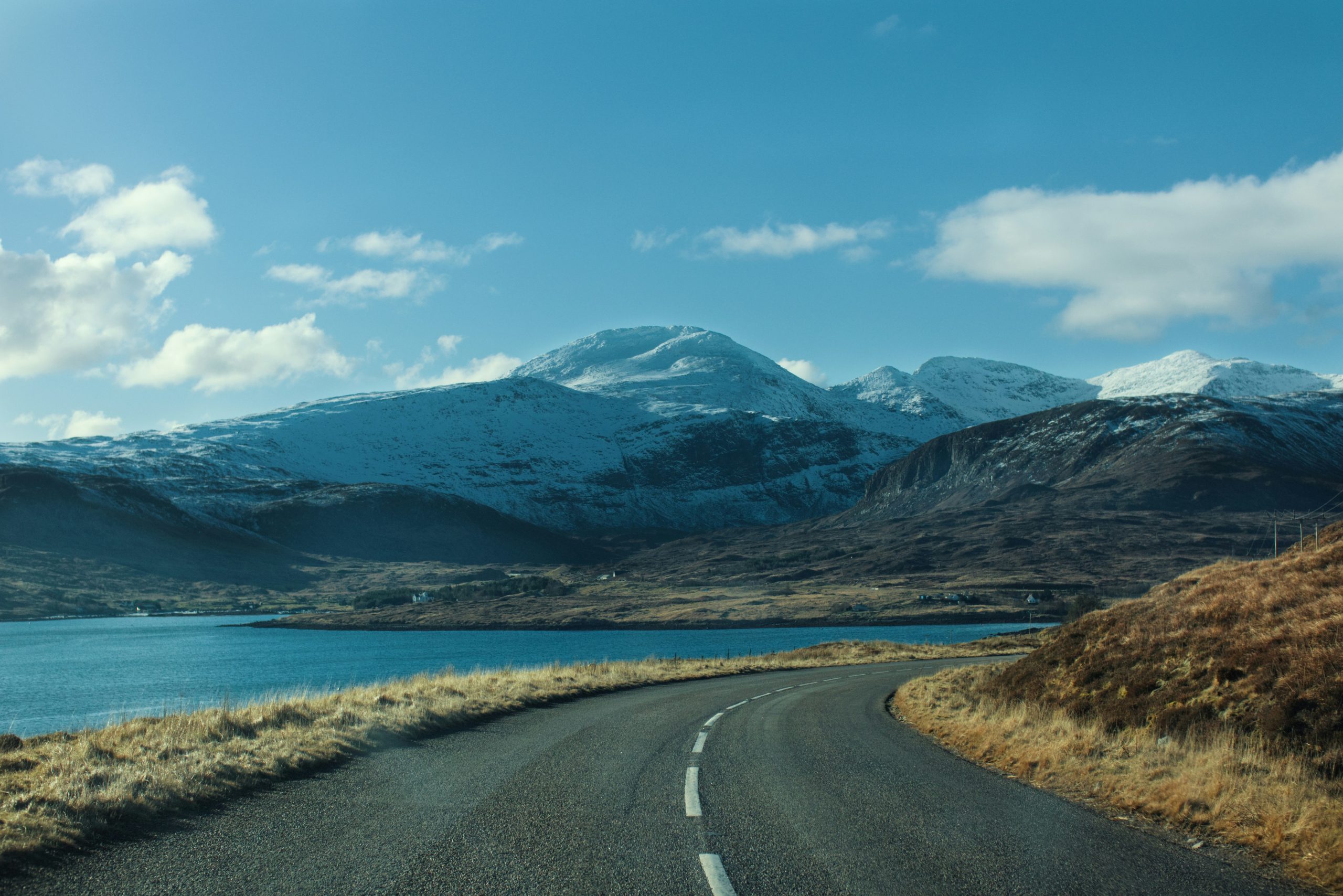
Scotland is an incredibly beautiful and rugged country, perfect for a road trip. Discovering the craggy coastlines, placid lakes, and rolling mountains is a delight. You can also find a multitude of historic castles, distilleries, and picture-perfect islands.
I love Scotland because it’s so beautiful. My favourite parts are the changing landscapes and the warm and welcoming locals.
After visiting Scotland several times over the past decade, a road trip would be the best way to see the country. It’s not a densely populated country, with only 5.5 million residents. You will spend most of your time driving in the countryside. It’s a country that was built for driving.
There are a few other things you should consider before your trip.
You can use these 10 tips to make your Scotland road trip more enjoyable, safer and better (based on my own experience):
1. Get Travel Insurance
I never leave the house without travel insurance. I also never rent a vehicle without comprehensive insurance.
It’s a cost. You may not even need it.
What happens if you don’t have it, and it isn’t there? You will pay for damages. You could end up paying thousands of dollars.
There are many narrow, rough, or single-track roads in Scotland (more about those later). They can be difficult to navigate. It is not uncommon to see windshield and tyre damage. Add to that the constantly changing weather, and you have a recipe for disaster.
For this reason, I urge you to purchase car insurance before your trip. It’s worth it to have peace of mind.
Discover Cars is my recommendation for renting a vehicle. You can add auto insurance to your booking with a click. The website clearly explains exactly what’s covered and how much the insurance costs.
Use the widget to obtain a quote. You can get a quote in seconds.
2. Rent the Right Vehicle
When it comes to renting an automobile in Scotland, you have two options. Your choice can drastically affect your trip. You can choose between a car and a campervan.
You’ll save money on gas and have to pay for accommodation, but a car is cheaper. A campervan/RV is higher and uses more fuel. However, you can sleep in the vehicle to save on accommodation. It’s not for me, but it’s up to you.
There is no right answer. Both options are great. Keep in mind that manual transmissions are standard in Scotland. If you prefer an automatic transmission vehicle, you will need to request it when booking.
3. Be Prepared to Drive on the left
Like in the rest of the UK, Scotland’s traffic is left-hand driven. However, the US, Canada, and most of Europe drive on the right.
When renting a manual car, you’ll have to learn how to use your left hand. (I prefer automatic.)
Driving on the left can be challenging if you are used to driving on the right side of the road. It can be not easy to drive on the left, especially when you are at a roundabout or in a large city. At first, drive slowly until you get used to it.
4. Understanding Roundabouts
Instead of stoplights or stop signs, roundabouts are traffic circles. The roundabouts force traffic to slow down, but without stopping. They are extremely common in Europe.
In Scotland, roundabouts are common. They also flow in the opposite (clockwise) direction to those in the US. Slow down dramatically when approaching a traffic circle. In a roundabout, all traffic moves in the same direction.
If there are multiple lanes, you’ll have to exit from the outer lane. The roundabout’s inner lane is reserved for vehicles that are not leaving immediately.
Signal to cars behind you when you are ready to exit the circular intersection.
You can signal your intentions if you are not comfortable at the roundabout. You’ll find they are easier to manage than you thought!
5. Speed Limits: Know them!
In Scotland, speed limits are posted in miles. This is great for Americans, but travellers from countries who use kilometres may want to pay more attention.
The following are common speed limits:
Built-up areas 30 MPH
Single roads: 60 MPH
Double roadways: 70 MPH
Highway speed limit: 70 MPH
These are only guides. To ensure your safety, always follow the local signage. If you’re unsure, it is better to drive slower until you can verify the speed. You might want to write down some conversions that you use often so you have them at hand if you’re confused.
6. Include time for scenic stops
Many travellers plan their itineraries and routes. It can be tempting when you have only a few short days to plan every detail (I used this method a lot). There are many things to do in Scotland. From quaint towns to scenic vistas to short hikes, there is plenty to see.
Every few minutes, you’ll want to stop to admire a mountain, loch or abandoned castle. Even the most common sights are worthy of an Instagram post. To avoid this, add buffer time to your itinerary. This way, you will have enough time if you want to take a break or make a diversion. This is something I cannot recommend enough. The best parts of any trip can be the unexpected ones. You don’t need to rush from one sight to another, so you should plan to take a break.
7. The Right Apps to Download
When you go on a road trip, you want to be away from your phone so that you can take in the culture of the place and the stunning views. Many apps will help you save money, be safe, and save time. Download the following apps to your phone if you are planning a road trip around Scotland.
Met Weather is the best UK weather app. Plan accordingly, as conditions can drastically change in Scotland.
Google Maps is the best app to find directions. Download your maps to use them offline.
Park4Night– An app that helps you find parking spots for your RV, campervan or trailer (including those for free).
Flush is a useful app to find public restrooms.
Petrol Price– A mobile app that compares and finds the best gas prices in your area.
8. Bring a paper map
When I travel by car, I always take a paper road map. Google Maps are easy to use and free. Also, mobile data coverage is reliable in Scotland. It’s always better to be safe rather than sorry. You don’t know when your mobile phone will break, the signal will go out (which is likely to happen in remote areas), or an emergency will occur.
Bring a paper map and leave it in your glove box. It’s unlikely that you will need it, but if you do, you’ll appreciate having it. Paper maps also make great souvenirs.
9. Learn How to Drive Single-Track Roads
As you leave the city, you might encounter roads with only one lane. They are two-way streets with only one space per vehicle. If you are in the same direction as oncoming traffic, there is not enough room to pass.
These roads are usually designed with passing areas at regular intervals. This allows cars to stop and make space. When you see cars approaching, take advantage of the passing areas to pass each other.
On single-track roads, you should also drive slowly around the corners. You can get into accidents because you cannot see the traffic coming from behind you. Drive slowly and be ready to stop at any time.
Remember that single-track roads can be a little rough. It’s easy to blow a tyre, especially when you pull to the side of the road to allow for passing cars. To be safe, you should always have a spare and insurance for your tyres.
10. Do Not Rush
Scotland may not be huge, but there is still plenty to see and do. You may want to hurry to get more on your itinerary. I urge you not to. The key is to focus on quality, not quantity. Slower is better. I’ve done countless road trips around the globe. This means spending more time in each place and driving less. If you do this, you will be able to experience more of Scotland’s culture.
You’ll also be driving along many smaller, curvy roads, and you may have to keep an eye out for farm animals that are prone to wandering. You’ll have to slow down for safety and concentrate on your driving. Enjoy the scenery, allow for detours and don’t rush from one sight to another. You won’t be sorry!
Suggested Routes
Scotland has a number of popular routes for road trips. Each one offers different sights and activities and takes a different amount of time. Choose the path that suits your interests to make the most out of your time.
Here are a few quick tips on the best Scottish road trips:
North Coast 5000 This is the most popular route for road trips in the country. The route loops around Scotland’s northern tip, starting and finishing in Inverness. Some of the most popular stops are Bealach na Ba and Cape Wrath.
It’s best to plan at least seven days. Keep in mind that summer can be busy.
Edinburgh/Glasgow To Glen Coe—Glen Coe, a beautiful valley in the Highlands, is both a National Scenic Area And a National Nature Reserve. It is a favourite spot for hikers and photographers and a must-see for anyone visiting the Highlands.
Glen Coe can be reached in just 2 to 2.5 hours by car from Glasgow or Edinburgh. It’s a great day trip, though I recommend staying overnight so you can take it all in. The Argyll Coastal route (listed below) is also a part.
Argyll Coastal route – This route runs along the west coast of Scotland for 129 miles (208 km), from Loch Lomond up to Fort Williams. This route is a good alternative to the North Coast 500 as it is less popular and less crowded. This route is known for its popular stops, including the Inveraray jail and the cairns at Kilmartin Glen and Glen Coe.
Plan to stay at least three nights. You could drive the distance easily in one day. This will allow you to take in the sights without having to rush.
Highlands Tourist Route—This route, which runs from Aberdeen to Inverness on the east side of Britain, is popular with history buffs. It includes many castles and museums, including the site of Culloden, the last battle fought on British soil.
Although it is only 116 miles (187 km) away, it takes at least three full days to cover the entire route.
Scotland Road Trip FAQ
How much time do you need to spend on a Scotland road trip?
At least 5-7 nights are ideal. The length of your trip will obviously depend on the itinerary you choose, but this is a good place to start.
Three days is enough time to go camping for a weekend or to take a shorter route.
What is the most scenic road in Scotland?
The Argyll Coastal Route and the Highlands Tourist Route are among the most scenic routes in Scotland.
Is driving in Scotland hard?
Driving in the city can be difficult, but once you reach the countryside, it becomes very simple. You should be careful on one-track roads, in roundabouts and on other single-track roads. Also, remember to drive on your left.
Which month is best for a road trip in Scotland?
In general, the best time to travel is between April and October. Autumn is my favourite season because you can see the leaves changing. Prices will be lower, and there will be less traffic.