
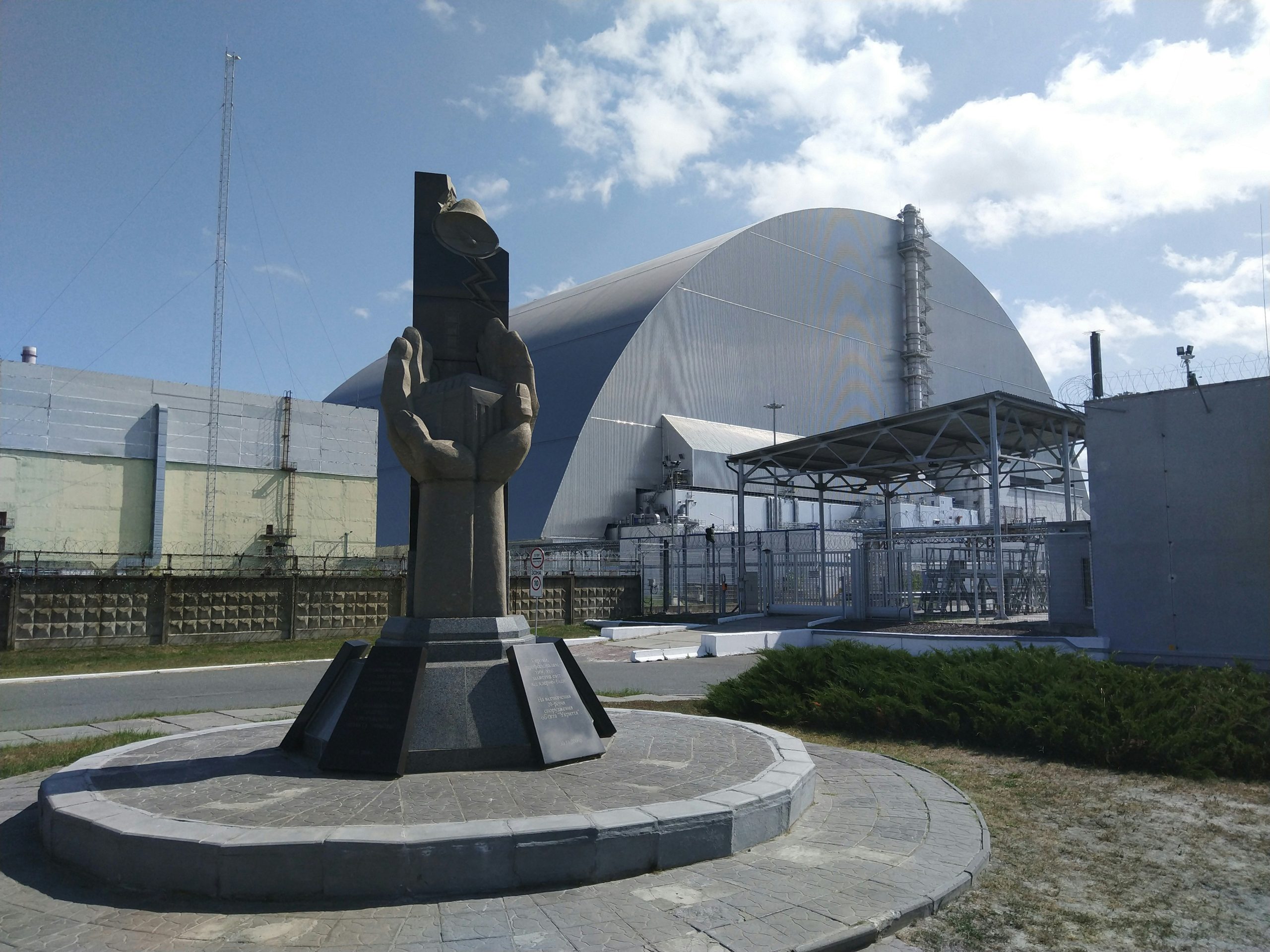
I read Andrew Blackwell’s book, Visit Sunny Chornobyl, a few months back. It was about the most garbage-filled and polluted cities in the world. It’s an anti-travel book. It’s all about the places that a traveller would never go to, the ugly places that we ignore. It was fascinating to read about places that are real but don’t get much coverage. This is my favourite book of the year. It’s funny, smart, and very well-written. Andrew is based in NYC, and I was fortunate enough to chat with him.
Tell everyone about yourself. Andrew Blackwell: My first step into writing was to be a reader. In high school and college, I always enjoyed reading and writing. However, I did not have any professional experience as a print reporter before I wrote this book. My background is as a documentary editor. Filmmaking teaches you a lot of storytelling and structure.
Matt Nomadic: How did the idea for your book come about?
My girlfriend and I lived in India for six months. She was working for an NGO, and I travelled with her to environmental sites. We saw some quite polluted, not-on-your-regular-tourist-itinerary places.
They are great!
I thought to myself, “You’re right, if nobody writes a guidebook for polluted areas, no one will know these places are worth visiting.”
This idea was always rattling in my mind. Over a few years, I wrote the first chapter and developed the book proposal in small steps. Once I had it, I began showing it to agents.
You have to write the first chapter of a non-fiction book first, especially if it’s your first. You’ll need to create a proposal that outlines the entire book. It was the book contract that made me go out and do it!
Matt Nomad: When did the idea for the book come to you? And when did Chornobyl happen, and how long did it take you to write the book itself?
This book was written in the spring of 2003. In the spring of 2006, I visited Chornobyl. In 2009, I believe, I received a book contract based on a chapter I wrote in which I discussed Chornobyl. Then, it took me two years to travel and write before I submitted it to the publishers. It was an odyssey.
Nomadic Matt: That’s a lot of time. How did you choose the locations in the book?
I wanted to include a variety of travel experiences and environmental issues. I thought about the book as both an environmental reporter and a travel writer. I didn’t like to spend every vacation in the forest.
The three criteria were environmental concern, geographic location and travel angle.
It’s a pain to get to the garbage patch. So, I decided to visit the garbage patch. This would be in the “cruise chapter.”
Nomadic Matthew: What was the best experience or destination you had?
Chornobyl will remain a special place in my heart. It’s a fascinating, beautiful, interesting place. You’re in a place where you don’t know anyone, don’t know how to navigate, and feel a bit lost or even isolated. Then, something happens, and you suddenly start feeling like you understand.
I had this experience in Chornobyl, where I felt like I was on a very limited official tour. I ended up staying overnight with my guide and getting drunk. We had a great time. I remember drinking cognac from tiny plastic cups at the dentist in this small room made of cinderblocks, which was only open for Zone workers on Friday nights.
Nomadic Matthew: Did you go to Chornobyl on your own?
Yes, I went to Chornobyl during my vacation. I went to Chornobyl and tried my best to imitate what a journalist is supposed to do. You know, you talk to people, make notes and learn stuff. It went pretty well.
The sample chapter and the proposal took me another two years to complete.
Nomadic Matt – What was your least favourite?
That’s hard. Some parts of China were difficult for me. A translator would have been necessary to get me through the language barrier. No one spoke English, and there were no signs in English.
The trip to the garbage patch, meanwhile, was also the most challenging. The trip was beautiful and extraordinary, but it also left you feeling slightly dizzy for almost a month. The ocean can be scary. You’re gone if you fall off the railing and no one notices. You are floating in the Pacific Ocean a thousand miles away from land. It’s physically and mentally exhausting.
Matt the Nomad: Why don’t we do more to talk about the environmental impact of travel?
It’s not hard to see why people don’t want to visit polluted areas. People don’t like to visit them because they think that the places are probably disgusting. I’d say that they aren’t really that gross.
I’d also add that many people travel to live out their fantasies about life, what it would be like in another country, or even what travelling is.
If you travel to learn about the world, you’ll find a lot more places than you would expect. This includes problem environments. All of us are interested in the environment. For me, this means that I’m interested in seeing pollution up close. It’s not as horrifying or disgusting as people think.
Nomadic Matt: I agree with you that people do want to experience the romance of a place. What do you hope people will take away from your book?
It’s going to sound pretentious, but for me, it’s about accepting that the world is not perfect. Many people are motivated to be environmentally friendly by an idealistic vision of the world, where everything is green, clean, and filled with exotic animals. It’s important to me that we are realistic and accept that we will never reach that idealized Garden-of-Eden-style environment.
If you are looking for romance in Paris, but it is not what you expect, you have two options. You can either think that it was a total failure and leave disappointed, or you can engage in the reality of what happened.
Even though your expectations are not met, it will be a more lasting and richer experience.
Nomadic Matthew: What did you learn about the way people perceive the environment during your travels to these places?
Yeah, definitely. I believe we use the grossness of certain places to make us care about environmental concerns. It’s fine on one level, but as media consumers and people who care about the environment, I believe we need to be able to connect with the story, the image, or the scares in order to understand why they are important. Connecting with the importance of it is great, but it also creates a lot of mythology.
The image of the “garbage patch” has been exaggerated. Much of it is about imagery. We think a place will smell, look, and feel disgusting, but when we go there, it is just another place.
The environmental issue is real, but we have been relating it to a kind of hyped-up imagery.
Matt Nomad: What advice do you have for travellers about travel and the environment
Ecotourism is a term used to describe a place where we can visualize untouched nature. We should broaden the concept of ecotourism so that it includes all kinds of environments, even if they are experiencing severe problems or recovering. Chornobyl is one example.
Travellers should not hesitate to contact NGOs or people working in the area on these topics. You’ll make many friends and experience some memorable experiences if you have a sincere interest. I am a journalist, but it is not always because I am a journalist that activists or organizations welcome me. It’s just that I called and said, “I will be in your region, and I am interested in what you are doing.” Can we hang out?”
Respect and genuine interest can open many doors to interesting places.
Andrew’s travel book was my favourite of the year. Meeting and interviewing him was a great experience, and it added depth to his book. These often overlooked destinations have a certain allure and unsettling quality.
Andrew’s issues have only become more relevant and important as the world shifts towards sustainability and green travel. Add it to your list of books to read if you haven’t already. The book is fantastic!